Kayura
Kazufumi Wada

Oribe Kezuri-otoshi Carved Rice Bowl

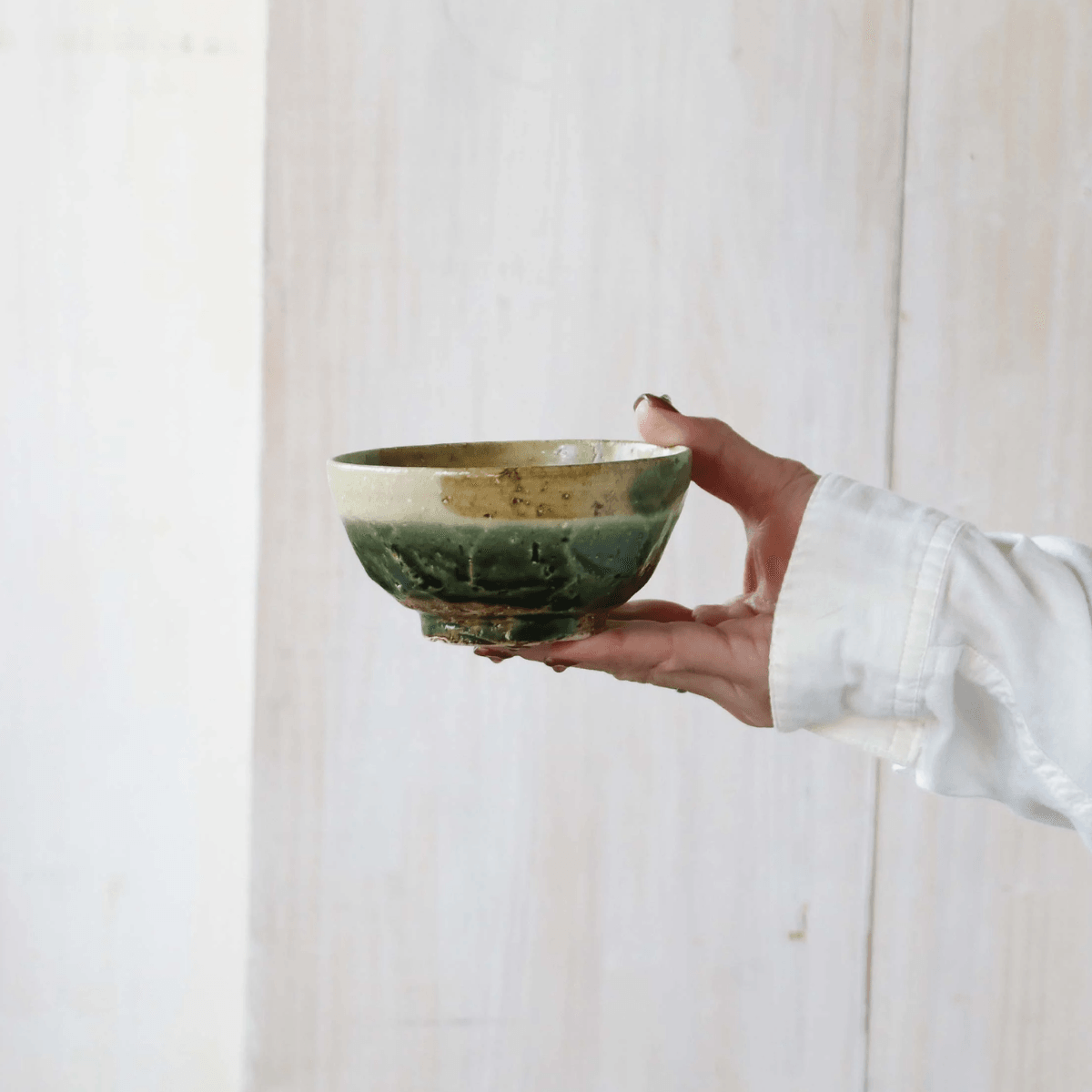
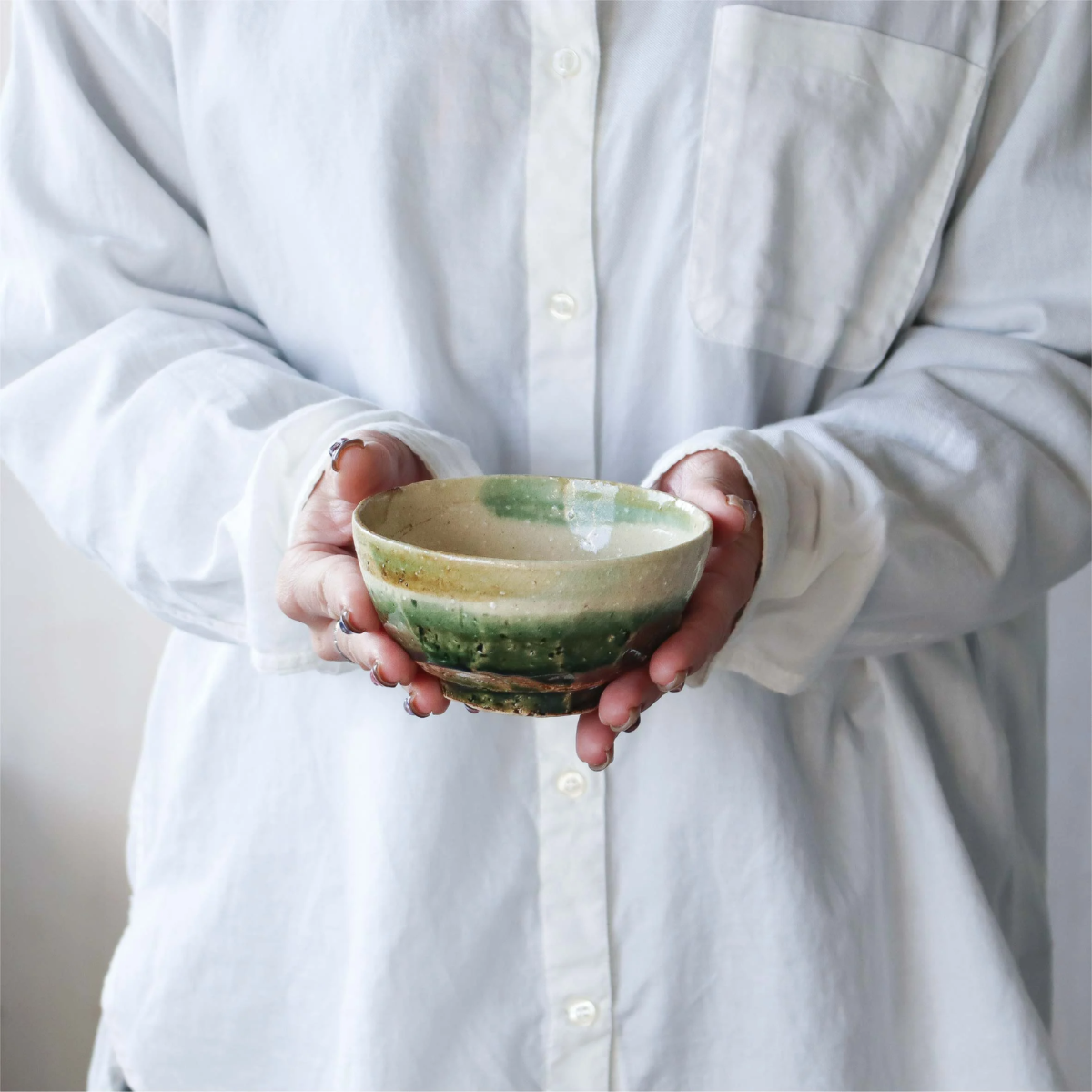
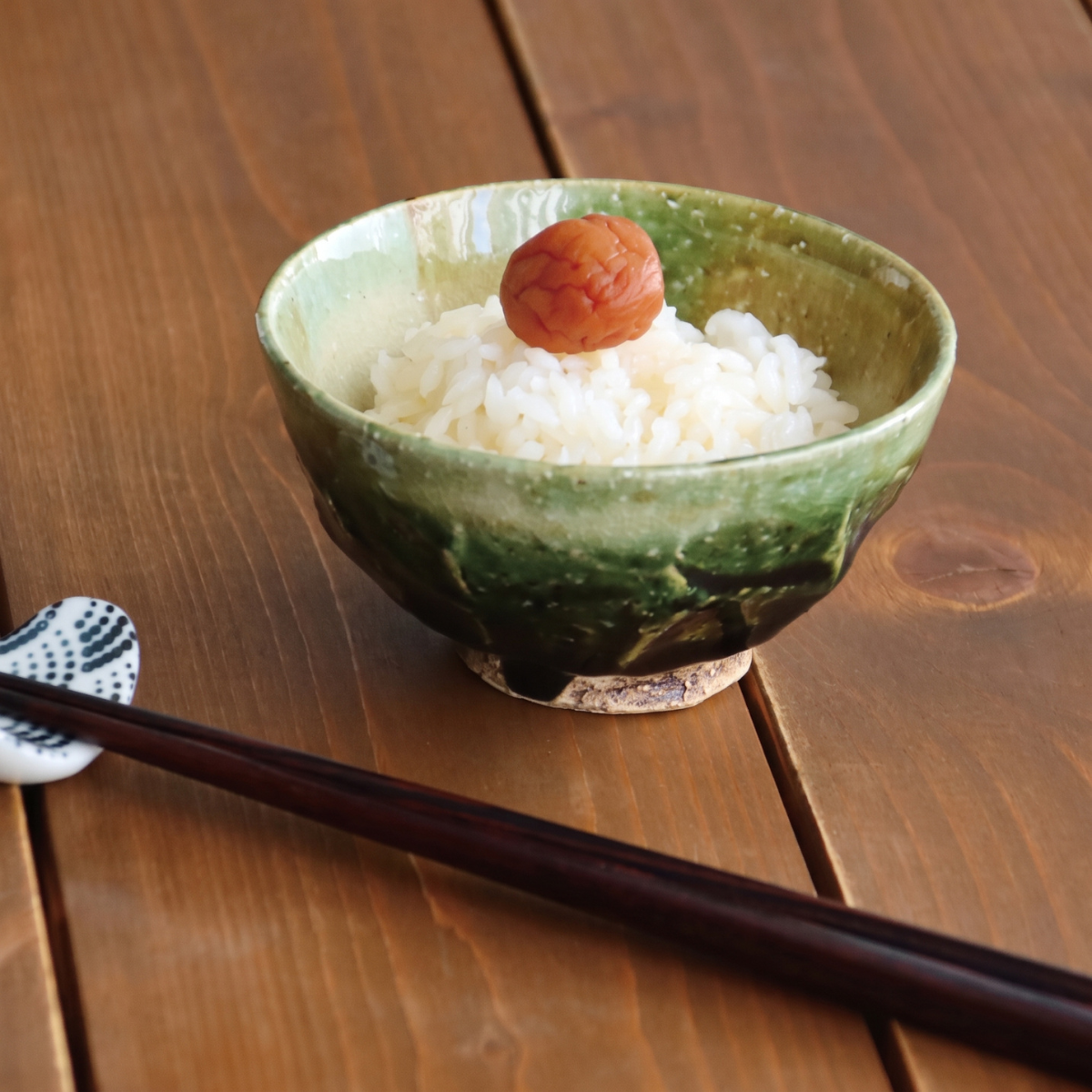
An Oribe rice bowl made by Kazufumi Wada, the fourth-generation potter at Keizan kiln in Toki City, Gifu Prefecture. The surface of each vessel, shaped on the wheel, is carved and finished by hand, one piece at a time. It comes in two sizes, small and large. Its simple, quiet presence settles easily into the everyday table.

The glaze is the Oribe glaze that has long been the foundation of Keizan kiln. Built on green, it develops variations in depth and pools depending on how the glaze settles, casting deep shadows along the straight and curved lines of the carving.

Wada selects and blends the clay and glaze himself. After shaping the form on the wheel, he uses carving knives and metal blades to shave away the surface little by little. It is work that demands concentration, skill, and time.

Even with the same clay, technique, and glaze, the finished colors differ from piece to piece. Variations in glaze density, pooling, drips, uneven color, and iron speckles are individual characteristics born within the kiln. Small marks and slight warping are likewise not defects, and do not affect use.

The uneven beauty of the carved surface cannot be reproduced by machine. It follows the fingers and holds steadily with a pleasing weight. What is made by hand sits well in the hand. This is a bowl whose character deepens the more it is used.


Specifications

Oribe Kezuri-otoshi Carved Rice Bowl
MaterialsEarthenwareAfter being shaped on the potter's wheel, the surface is shaved and finished by hand.
Glaze (Oribe)A traditional glaze of Mino. It finishes in green tones.
DimensionsSmall: 11.5 dia. x 6 cm H · 300 cc · 300 g / Large: 12.5 dia. x 6.5 cm H · 400 cc · 240 g
Made InToki, Gifu, Japan
SKUORBKO
Making the Vessels

From Clay to Firing

Clay and Wheel

Clay and Wheel

The making of a vessel begins with the choosing of the clay. Wada selects it himself, then raises it into form upon the wheel. His hands rest against the turning clay, drawing it upward with his fingertips, settling the lines of the mouth, the neck, the body. Even when the same shape is sought, the condition of the clay and the movement of the hand give rise to slight differences in each piece. It is for this very reason that what is made by hand sits so well in the hand.

Glaze and Line Carving

Glaze and Line Carving

Besides Oribe, he works in the glazes handed down in Mino — kohiki (a white slip drawn over the clay beneath the glaze), Kiseto (the pale yellow of old Seto), turquoise glaze. The blending of them, too, Wada does himself. When the glaze changes, the character of the vessel changes greatly. Line carving is a technique in which patterns are incised with fine lines. Where the glaze gathers, the lines rise up in deeper color. The carving bears also on how the piece appears when taken into the hand.

Kiln and Firing

Kiln and Firing

The finish is the firing. The vessels are set on the shelves, the kiln is packed, and the fire is lit. Oribe and tenmoku are each fired in their own way. Since the color that emerges depends on how the flame strikes and how the temperature rises, the manner of firing is decided glaze by glaze. Position within the kiln and the pitch of the fire also govern the result, so the firing proceeds with the kiln watched throughout.

Care Instructions

Dishwasher safe. The microwave may be used for reheating only. Please avoid open flame and oven use.