Kayura
KISEKI: by Fukuda Hamono Kogyo

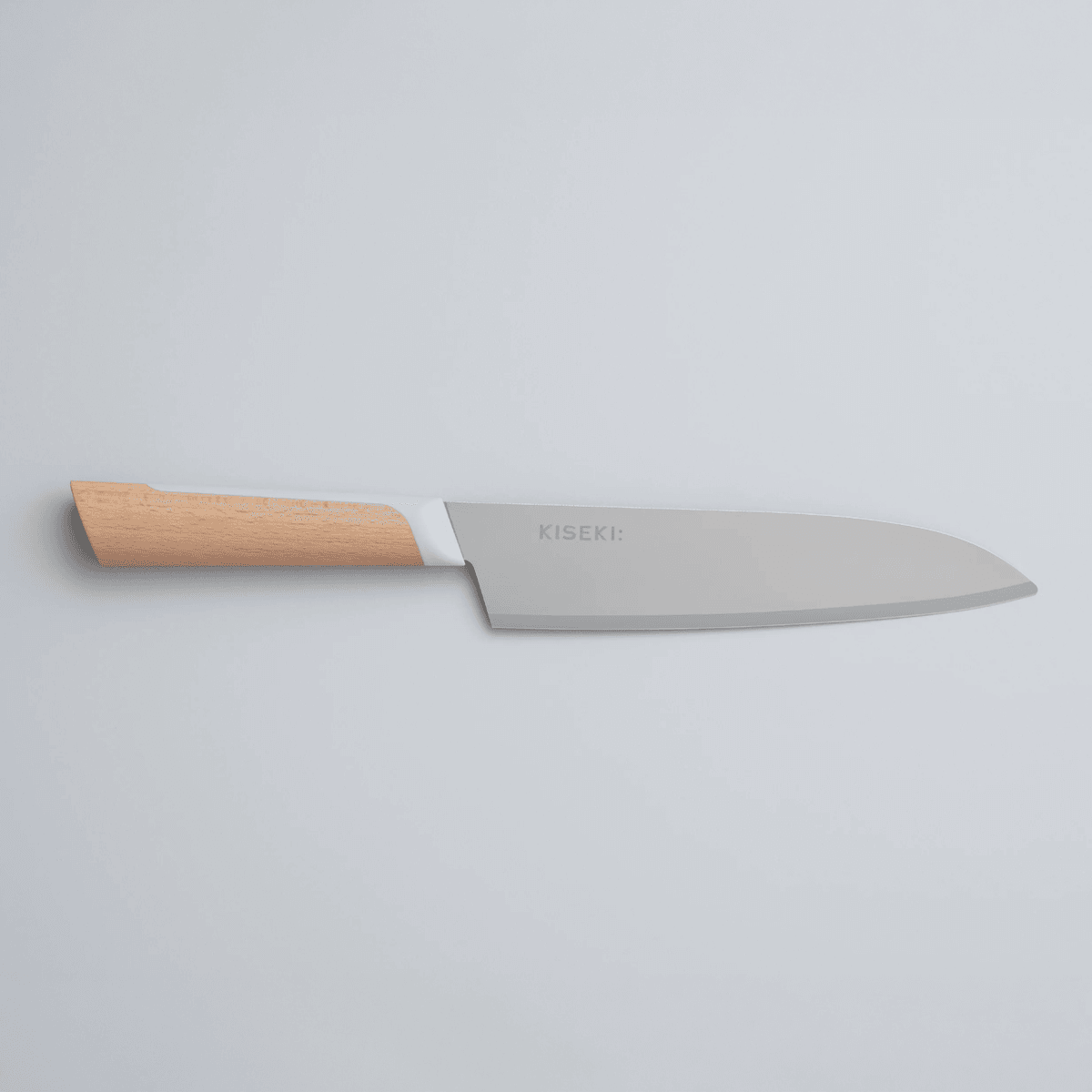
KISEKI: Santoku

For generations, tungsten carbide was the metal no one could make into a kitchen knife: hard enough to cut steel, yet too unyielding for a smith’s hammer. In 2022, the brilliant metallurgical engineers of Fukuda Hamono Kogyo in Seki made it possible. The KISEKI: Santoku is the first kitchen knife of its kind ever produced in series, and a quiet revolution for the professional chef or home cook.

Seki has been sword-making country since the fourteenth century, and Fukuda Hamono Kogyo has shaped blades there for 130 years for the most demanding industrial applications. This is the first they made to fit in a hand.

Its blade is cemented tungsten carbide, a metal second only to diamond, which Fukuda Hamono Kogyo spent two years and more than a hundred prototypes perfecting. Each one is cut by an electrically charged, ultra-fine wire over ten patient hours, then ground to just 1.2 millimetres. It enters a tomato without a sound and leaves the slice clean. Because the ultra-fine blade glides through cells rather than crushing them, flavour stays where nature put it: carrots taste sweeter, tuna richer, onions gentler.

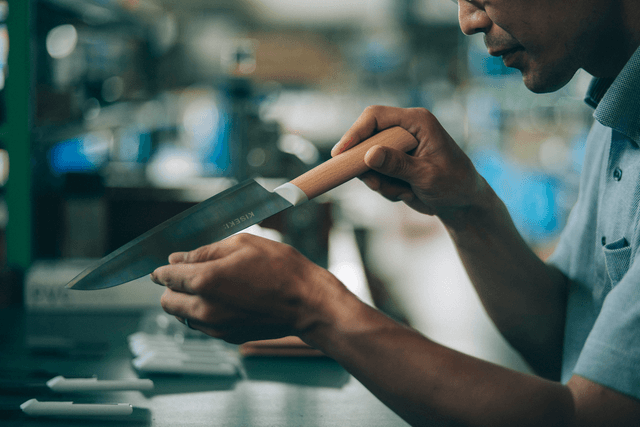
The edge stays keen long after steel would have dulled. It doesn’t rust, and it never needs a honing steel. When it is finally ready for sharpening, no ordinary whetstone will do: only diamond is harder than the blade. For this moment, KISEKI: offers its own diamond whetstone and a holder made to fit the Santoku (sold separately). The holder steadies the blade at the right angle, so a few unhurried strokes bring back the edge it arrived with, easy even for someone who has never sharpened a knife before.

The handle is cut from trees grown in the forests of Gifu: mizunara oak with its bold grain, yamazakura (mountain cherry) that deepens with the years, or elegant, quiet buna (beech). Every knife is measured to sub-millimeter precision in three dimensions before it leaves the workshop.

The world's most advanced kitchen knife, made for a lifetime of meals and enjoyment.

Material

The metal that cuts steel, in a kitchen knife for the first time. 

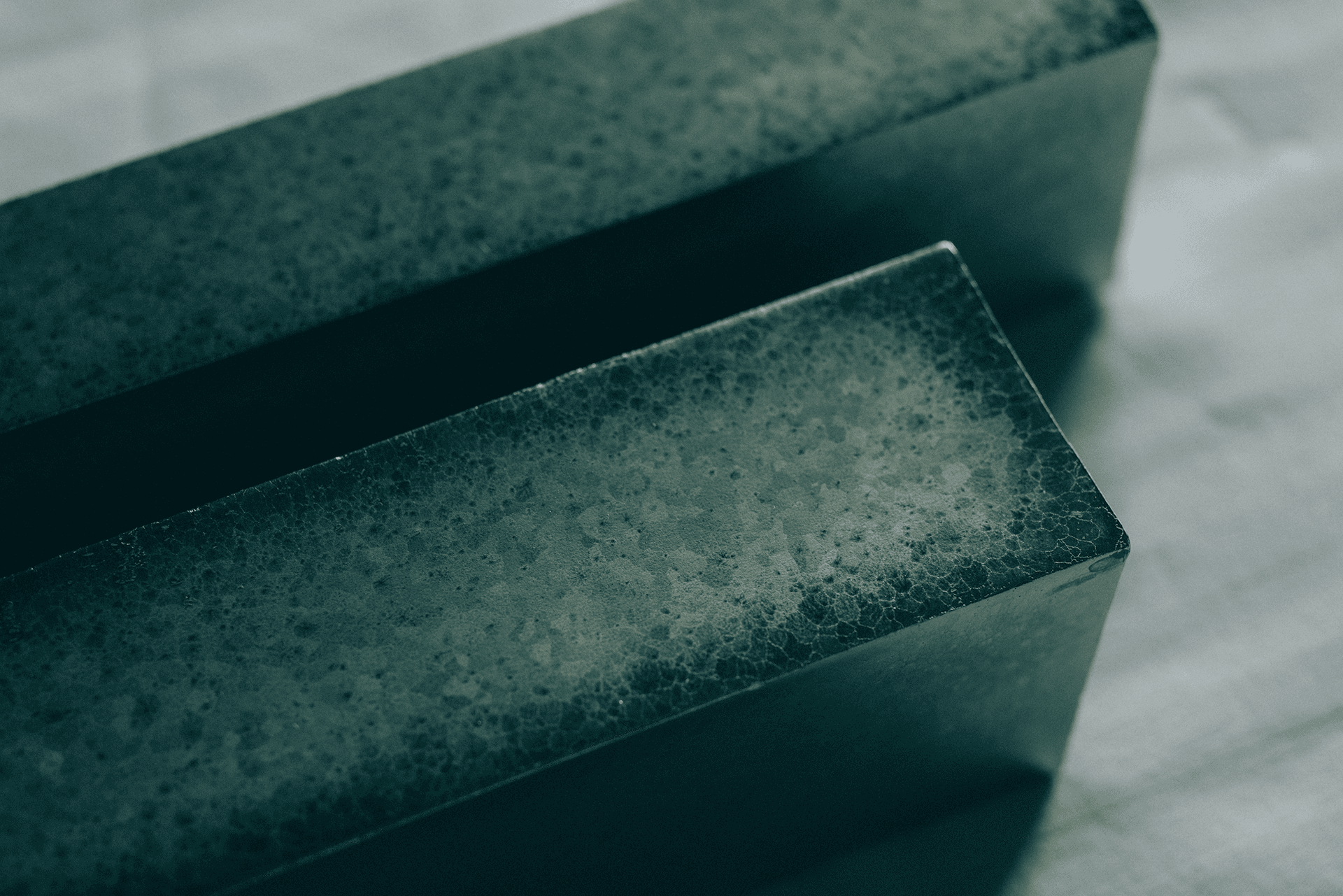
Chōkō gōkin—cemented tungsten carbide—belongs to an entirely different lineage than steel. In KISEKI:’s proprietary KS111 alloy, microscopic grains of tungsten carbide are suspended in a nickel matrix, fused under immense pressure and heat into a singular, unyielding plate. It is the very material heavy industry relies upon to cut steel itself.

For generations, the kitchen knife has lived by compromise. Carbon steel takes a breath-catching edge, only to hunger for rust. Stainless steel turns away water, but surrenders a degree of soul and bite. Carbide refuses the trade-off—delivering an edge of singular sharpness, and holding it indefinitely.

Second only to diamond.

Tungsten carbide yields only to diamond, easily outstripping conventional knife steels—which is why industry turns to it to sculpt steel itself. This supreme density allows the blade to take an astonishingly fine apex, and keep it intact cut after cut.

An edge that endures. 

Where steel rolls, rounds, and yields to friction, carbide remains unbothered. The breathless clarity of day-one sharpness lingers through months of work, proven in KISEKI:'s cutting tests. Because its microscopic edge never rolls or deflects, the honing steel becomes obsolete; there is simply nothing to realign.

The soul of carbon, the grace of stainless. 

No dark patina to nurse, no ritual oiling at the end of the day. It delivers the crystalline bite and fluid glide of high-carbon steel, wrapped in the effortless, quiet resilience of stainless.

Delicate thinness, quiet poise. 

The raw density of carbide allows an unprecedented 1.2-millimeter geometry. It glides through prep work almost weightlessly, yet retains a steady, planted center of gravity that never feels fragile.

How Blade Materials Compare
Carbon steelStainless steelKISEKI: tungsten carbide
SharpnessCarbon steelExcellentStainless steelGoodKISEKI: tungsten carbideExcellent
Edge retentionCarbon steelModerateStainless steelGoodKISEKI: tungsten carbideExceptional
CorrosionCarbon steelHighly susceptibleStainless steelResistsKISEKI: tungsten carbideResists
Daily careCarbon steelDry and oil every timeStainless steelWash and dryKISEKI: tungsten carbideWash and dry
SharpeningCarbon steelAny whetstoneStainless steelAny whetstoneKISEKI: tungsten carbideDiamond stone, rarely
HoningCarbon steelOften, to realign the edgeStainless steelOften, to realign the edgeKISEKI: tungsten carbideNot needed
How It's Made

Every rule of knifemaking, rewritten for a metal that refuses them.

Carbide is nearly twice as dense as iron, ignores magnets and resists rust — but it cracks under a press and splinters under a drill. So the Seki team replaced each traditional step with a precision one, and wrote two patents and a design registration along the way.

ALLOY

KS111 Carbide

A proprietary blend, rebalancing nickel and tungsten carbide for toughness as well as hardness. Developed and produced with Nippon Tokushu Gokin, supplied as 2 mm plate.

CUT

Ten hours of wire

Stamping cracks it and lasers aren’t precise enough, so blanks are wire-EDM cut at one thousandth of a millimeter precision — forty at a time, ten hours per batch, with no heat distortion.

EDGE

Ground to 1.2 mm

About thirty minutes of CNC grinding per blade, from data won through 100+ prototypes. A three-facet edge, finished with a “spark-out” pass that guards against chipping.

HANDLE

Gifu hardwood

3 options of fine Japanese hardwoods: mizunara, yamazakura or buna, grown in Gifu, 3D-machined and urethane-finished in the Seki factory, with a fine texture on the bolster for grip.

JOIN

No rivets, no drilling

Drilling carbide risks micro-cracks, so the blade is held by an injection-moulded, glass-fibre-reinforced polyamide bolster — a material from high-end survival knives — developed with a local Gifu firm.

CHECK

Measured in 3D

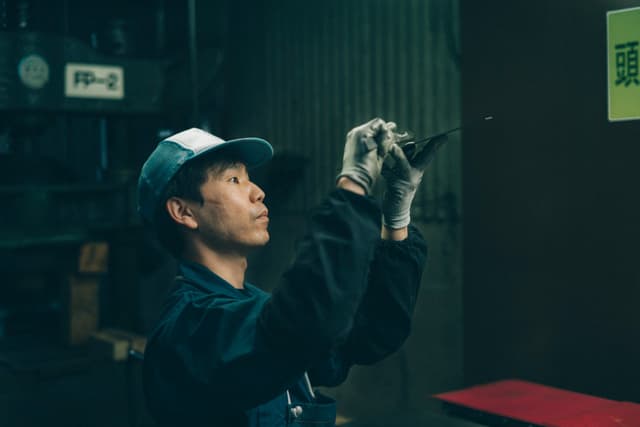
So every customer gets the same edge, each finished knife is inspected on a 3D shape-measuring machine and checked by hand before it leaves Seki: quality control to the thousandth of a millimetre.

Specifications

MaterialsKS111 Cemented Tungsten CarbideTungsten carbide is among the hardest materials made by human hands, surpassed in nature only by diamond. Industry relies on it to cut steel itself. KISEKI: refined it into an alloy of its own, KS111, balancing its hardness with just enough resilience to hold a fine kitchen edge. The result is a blade that stays sharp long after steel would have dulled, barely rusts, and needs no honing steel. It is dense enough to feel sure and steady in the hand, yet ground thin enough to glide through food without bruising it.
Mizunara (Japanese oak)Mizunara grows slowly in the cool mountain forests of northern and central Japan, and that patience shows in its grain. Bold and open, it is crossed by the shimmering flecks Japanese woodworkers call toranofu, “tiger stripes,” which catch the light as the handle turns. It is the same oak prized for ageing Japanese whisky. Dense, firm and reassuringly solid, mizunara gives the knife a grounded, confident grip, a handle with presence.
Yamazakura (wild mountain cherry)Yamazakura is the wild cherry of Japan’s hillsides, the tree whose blossoms have drifted through centuries of poetry. Its wood is fine-grained and silken, smooth enough that Edo-period craftsmen carved woodblock prints from it. It begins a soft reddish-brown and slowly deepens toward amber and russet as it meets light and hands, so each handle grows richer with every meal. Of the three woods, it is the warmest, and the one that most visibly becomes your own.
Buna (Japanese beech)Buna is the beech of Japan’s old-growth forests, the tree that blankets the ancient Shirakami mountains. Its wood is pale and calm, with a close, even texture and only the faintest freckling of grain. Light in tone but hard-wearing, it has long been shaped into bowls, bentwood chairs and everyday tools. On a KISEKI: blade it is the most understated choice: clean, quiet and modern, letting the carbide speak.
DimensionsOverall: 320 mm long, 42 mm wide, 140 g
Handle: Gifu mizunara (mountain oak), yamazakura (mountain cherry) or buna (beech)
Bolster: glass-fibre-reinforced polyamide
Made InSeki, Gifu, Japan
SKUKSS