Kayura
Hinomoto Aloha by Wataya

Flowers and Grasses on Black – Kimono Aloha Shirt

Made by Wataya

A "Hinomoto Aloha" shirt made by Ningyo no WatAya in Moka, Tochigi Prefecture. Rather than remaking an old kimono, it is tailored from a bolt of new kimono cloth, turning kimono patterning into an aloha shirt you can wear every day or on your travels. It can be washed in a household machine, so care is simple.

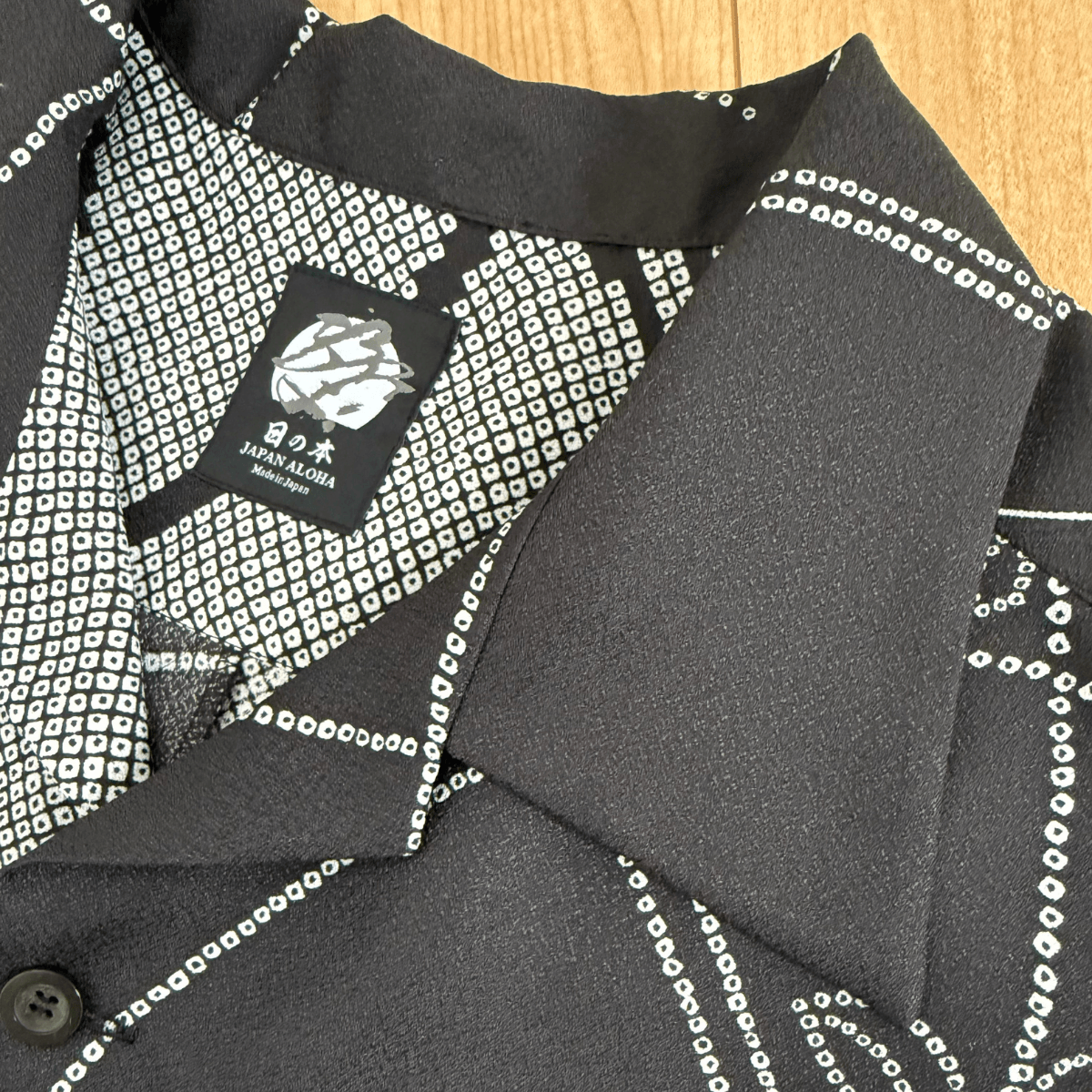
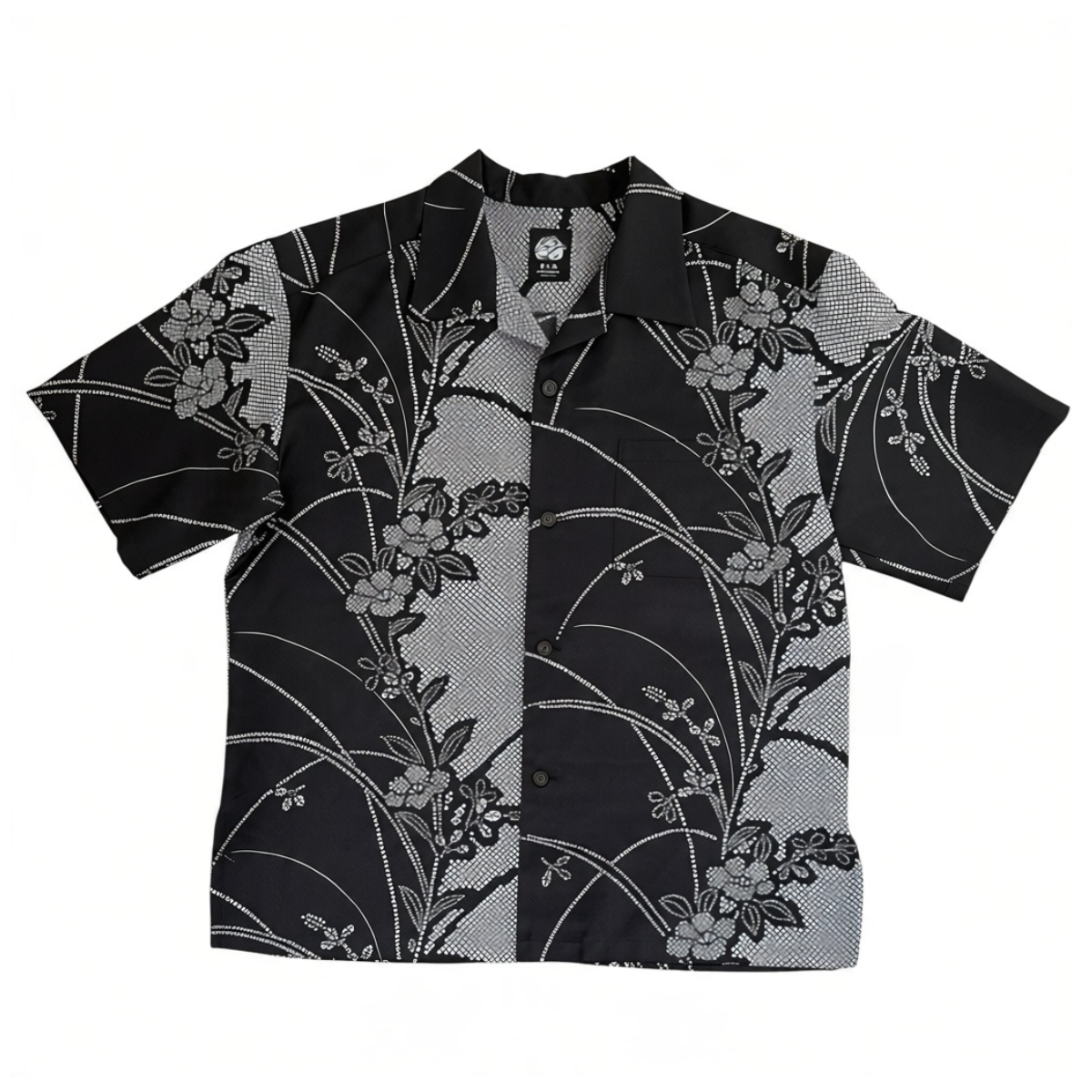
The pattern is one of grasses and flowers. Against a black ground, grass leaves drawn in dotted lines of white grains stretch out in gentle arcs. Gray panels in a mesh-like weave reminiscent of shibori run vertically as bands, strung with small flowers and sprigs. The white grain motif spreads across the inside of the collar as well. The monotone gradations give a crisp, composed impression.

The material is a polyester cloth of the kind used for fine kimono. Touch it alongside silk and you will hardly notice a difference against the skin. It stands up to water, resists wrinkling, and is highly durable. Because the cloth is new, there is none of the fading or staining found in older kimono.

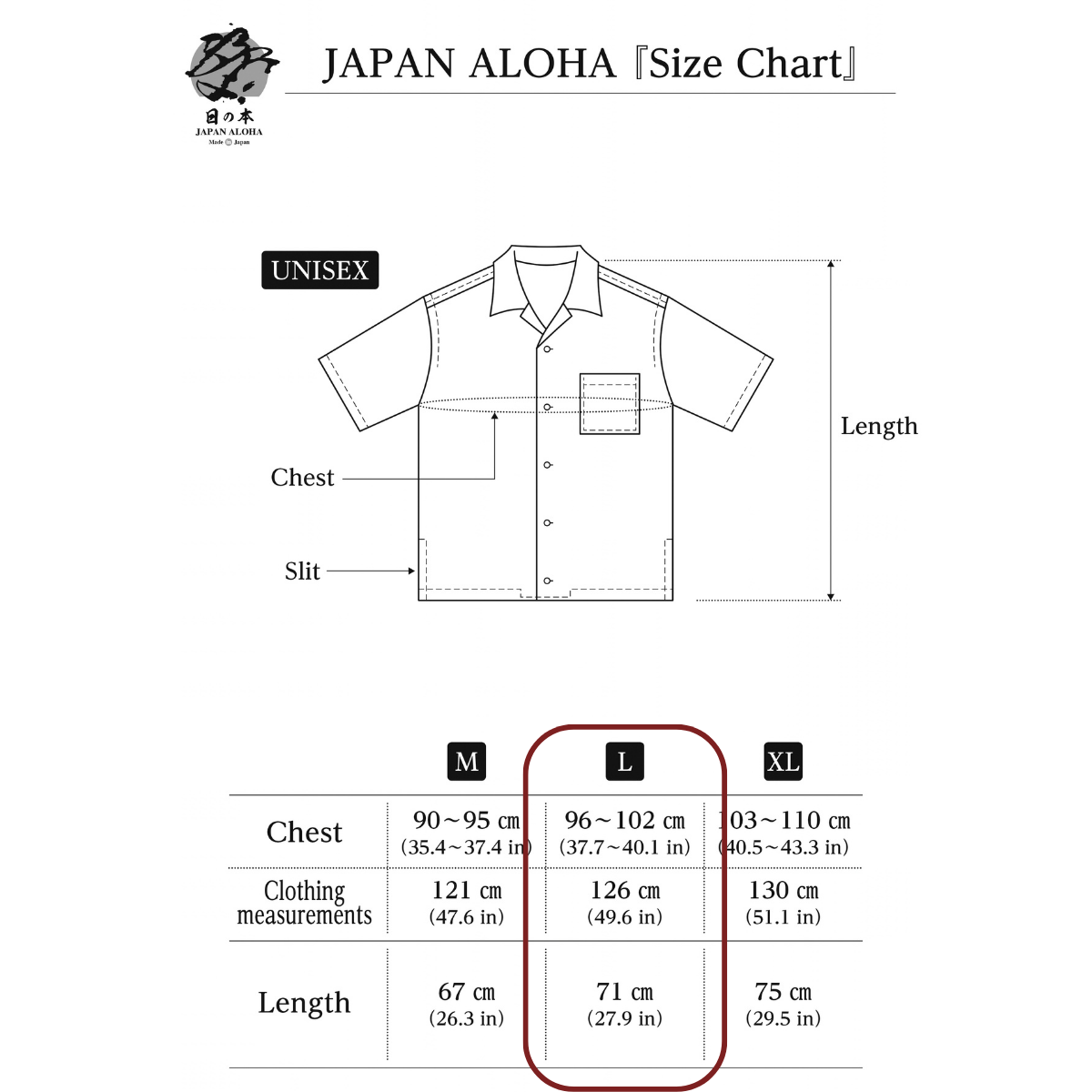
Unisex and cut with room to move. Size L, suited to a chest of 96–102 cm.

The sewing is done by hand by artisans within Tochigi Prefecture. From cutting the cloth to the final finish there are as many as ten steps, and an artisan can complete only one shirt in a day.

For strolling through town, sightseeing, or resort days. Easy to pair with trousers or shorts, and just as welcome as everyday wear. Do experience a high-quality kimono aloha shirt made by hand.


Specifications

MaterialPolyester (kimono fabric roll)A bolt of polyester fabric of the kind used even for high-end kimono. Compared side by side with silk, the difference in feel against the skin is barely noticeable. It is water-resistant, wrinkle-resistant, and highly durable.
DimensionsL: Body length 71 cm · Chest 96–102 cm (garment chest 126 cm)
Made InTochigi, Japan
SKUBWKB
Our particulars

From new cloth, a single garment.

The Hinomoto Aloha is not an old kimono remade. We source new bolts of cloth and, in repeated consultation with our sewing artisans, make each shirt by hand from cutting to stitching. Even a seasoned hand can finish only one shirt in a day. What follows is an account, in order, from the choosing of the cloth to the final pressing.

Choosing the cloth

Bolts of cloth have long been woven in a wide range of materials and widths, suited to the climate and customs of Japan. We seek out and acquire new bolts of this kind, and make them into aloha shirts. The polyester bolts we use — a cloth found in fine kimono as well — resist water, seldom crease, and can be washed at home with ease. Nor is there any fear of the fading or staining that comes with an old kimono.

The craft of cutting

The first step is the cutting of the cloth. The front panels, the back panel, the sleeves, the collar — each is cut away in turn. From a single bolt, only two shirts can be made. Cutting allows no error; of all the stages of sewing it is the most laborious, and the one that demands the greatest care.

The Craft of Sewing and Finishing

The sewing comprises ten stages: pocket, yoke, brand label, sleeves, side seams, collar setting, hem, buttonholes. Of these, setting the collar is the most exacting; a single shirt takes a full day to complete. For buttons we use domestic bamboo rather than the coconut customary to aloha shirts. It has a quiet lustre, and sits well with the cloth.

Care Instructions

This item can be washed with water at home. Please place it in a laundry net before washing. To preserve its texture for years to come, we recommend dry cleaning.