

Art Panel
Hannya Wabori Art Panel
般若 和彫りアートパネル$740In stock
Dragons, phoenixes, flowers and birds, wind and moon — all catching the light and shining. The hand-engraver's art handed down in Takaoka.
Chōkin — the traditional technique of engraving pictures into metal with a tagane (the fine steel chisel struck by hand) and a hammer. Wada Shunsuke, the fourth generation, has taken up the family trade carried on since his great-grandfather's day, widening its range beyond Buddhist altar fittings to the pop culture of anime and games.
Chōkin — the traditional technique of engraving pictures into metal with a tagane (the fine steel chisel struck by hand) and a hammer. Wada Shunsuke, the fourth generation, has taken up the family trade carried on since his great-grandfather's day, widening its range beyond Buddhist altar fittings to the pop culture of anime and games.
Wada Engraving Workshop began in Takaoka — a city known for its brass Buddhist altar fittings — as a workshop that cut its designs into the altar fittings of temples and households with tagane and hammer.
Engraving upon Buddhist altar fittings gives form to the visionary beauty and the old tales of Japan, and at the same time it is work that turns the mind toward the story of each customer's own life. At times it has kept company with grief; at times it has given expression to the pleasures of living.
After university I worked in film and video production at a game company, then returned to Takaoka and entered the family trade. What I hold to is this: not to stop at the working of metal, but to give a story its shape. To the inherited techniques I join the design of patterns and the proposing of ideas, and so I carve a customer's feelings, their history, and the Japanese sense of beauty into metal that endures, delivering work that shines across time. Bearing the weight of that history, I go on venturing into new fields as well.
I was born into a family that has made its living by chōkin since my great-grandfather's generation, and learned wa-bori engraving from my father and grandfather. Wa-bori chōkin is a carving technique particular to Japan, in which metal is worked with chisel and hammer.
By adjusting the breadth and depth of each line, and the way the light returns from it, a countenance emerges that is at once weighty and fine. Only hand carving yields that brightness where a deeply cut channel catches the light. Laser work burns and melts the surface, so luster and relief are difficult to obtain; a piece of chōkin is far more beguiling in the hand than in a photograph.
With chisel work handed down for more than a century, and a feeling for drawing out the nature of each material, motifs such as dragons, phoenixes, and the flowers, birds, wind and moon are given both strength and grace.
What can be carved is any metal softer than the chisel itself — brass, copper, silver, steel, titanium. Since each material shines differently and cuts differently, I make a trial carving to be certain before finishing the work.
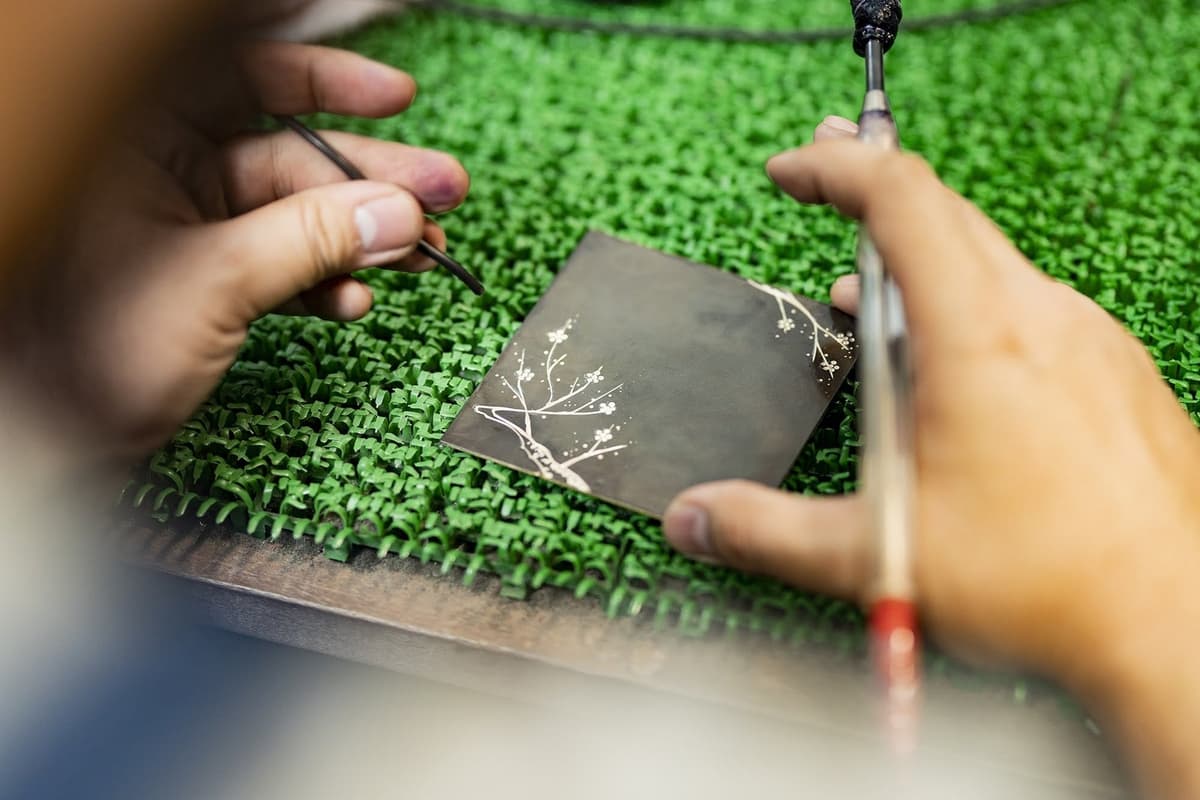
Upon the foundation of wabori chōkin I combine the drawing of designs with the making of prototypes from 3D data. The experience in computer graphics and film I gained at a game company lives on in the construction of volume and the rendering of light. For casting, colouring and the like, I join forces with fellow craftsmen and with specialist firms, arriving at expression beyond the reach of one pair of hands.
I keep in mind, too, the meeting of my work with many other cultures — musical instruments, knives, animation, games, professional wrestling. An encounter with a knife maker began the engraving of grips; now I engrave the blades of kitchen knives as well. There have been occasions to exhibit abroad, and visitors to Japan have taken pleasure in the work.
Working alongside creators and companies, I continue to make things visionary and singular, in which tradition and the culture of the present sound together. Even an unformed enquiry — "I should like to make something in metal" — is welcome.

The making begins by turning the mind toward the world and the story held within a motif. The traditional motifs of Japan carry tales long handed down and meanings of their own. They live not only in the ornament of temples and shrines and in Buddhist fittings but in today's animation and games as well, and so have shaped a world particular to Japan.
A design begins with listening to the commission. What is to be carved, who will use it, what price it is to meet. From these I settle the placement and the mood, and draw a design that makes use of the story. Thinking as far ahead as how the piece will be held while it is cut leads to carving that is unforced, and beautiful.
Through designs that join the traditional to the present, I spin the Japanese sense of beauty forward into the future.
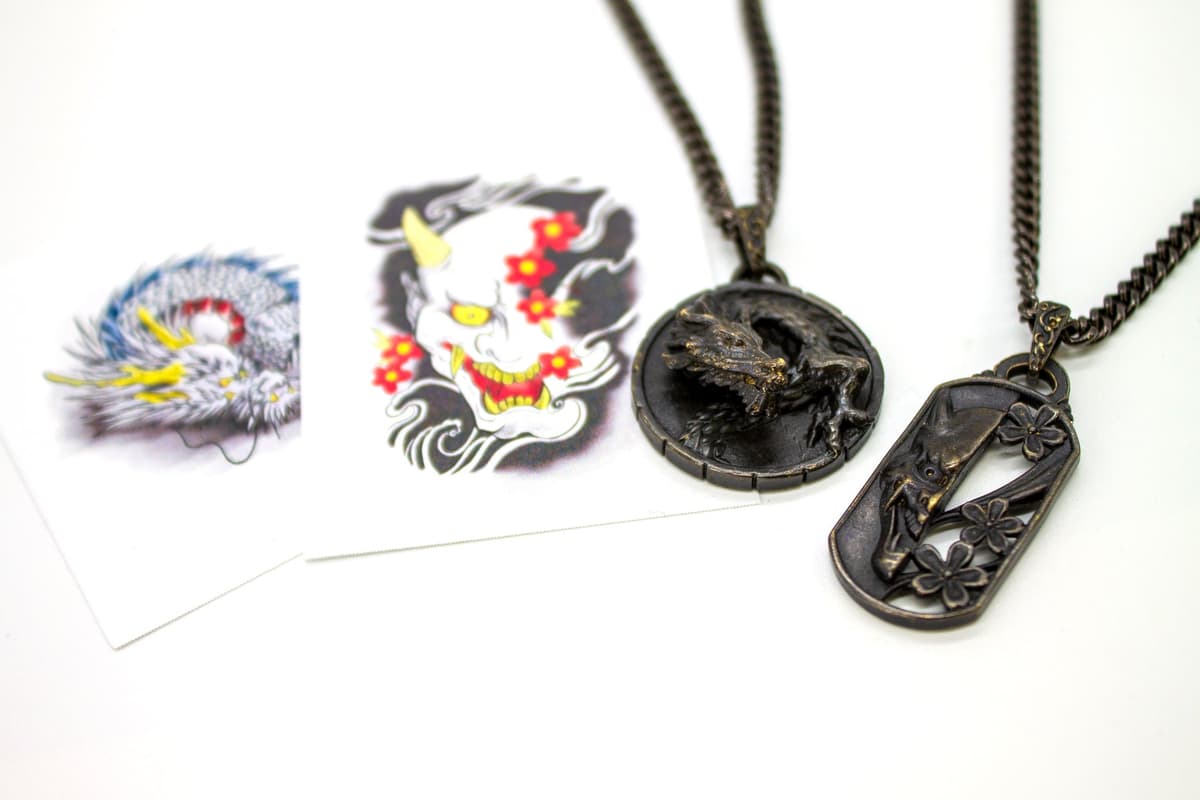
My aim is to keep making work that moves people — honoring tradition while answering the changes of the age. Standing before a solemn temple, or the ornament of a festival in full fervor, something in me trembles: an involuntary "oh." From here I would like to venture into fields closer to present-day life as well, fashion among them.
In 2025 I founded ProjectO, a creative team dedicated to carrying Japan's decorative crafts out into the world. In an age that prizes cost-efficiency and simplicity, I want to speak for the allure of traditional ornament directly, without apology.

Born in Takaoka, Toyama, into a house of metal engravers unbroken since his great-grandfather's day
After university, takes charge of planning, producing and editing video content for amusement machines at a major game development company
Returns to Takaoka and enters the family workshop, Wada Chōkin Kōbō. Takes up the chōkin trade of Takaoka bronzeware
Invited as an official guest to OTAKON, held in Washington, D.C.
Takes up the direction of the workshop as the fourth generation.
Took part in a startup development programme of the Ministry of Economy, Trade and Industry
Founded a team devoted to creating new value in decorative craft
Wada Engraving Studio 3-2 Omachi Toyama Prefecture Takaoka, Toyama 933-0916
和田彫金工房 〒933-0916 富山県高岡市大町3-2